

March 2026
Deutsche Bank ranked “A leading trade finance provider globally” in Euromoney Trade Finance Survey amid rising complexity in global trade
Deutsche Bank has secured 21 No. 1 client rankings in Euromoney’s 2026 Trade Finance Survey, with the results also highlighting the key pressures shaping client priorities – from FX volatility and cybersecurity risks to geopolitical uncertainty and evolving regulation.
This year’s findings come at a time when global trade is operating against an increasingly complex and fragile backdrop. Heightened geopolitical tensions, expanding sanctions regimes, and the risk of sudden market dislocation are placing renewed emphasis on certainty of execution, risk mitigation, and balance-sheet strength.
With an estimated 90% of global trade now relying on trade finance1, its short tenors, self-liquidating structures and robust documentary controls continue to support industry confidence amid uncertain conditions.
In this context, Euromoney’s latest Trade Finance Survey shows how corporates are responding to today’s cross-border challenges, and how they are being supported.
A trusted partner in turbulent times
Euromoney’s Trade Finance Survey is one of the sector’s most comprehensive benchmarking exercises, offering authoritative insight into client needs and perceptions of the banks they work with. The latest survey reached 12,700 corporates across 96 countries, assessing 436 trade finance providers and sharing their priorities, experiences, and outlook for the market.
Alongside receiving multiple No. 1 positions, including No. 1 Trade Finance Products for Germany, Deutsche Bank was ranked ‘A leading trade finance provider’ globally and for Asia Pacific, ‘An outstanding trade finance provider for Western Europe’, and No. 1 trade finance provider for the United States, reflecting the relevance of the bank’s Global Hausbank approach for internationally active corporates.
The survey found that corporates view Deutsche Bank as a structural partner for complex cross-border activity. Across regions, clients consistently highlight balance-sheet strength, risk expertise and execution discipline. In Asia Pacific, Deutsche Bank stood out for balance-sheet strength and cross-border risk expertise. A wholesale trade client in China points to the bank’s ability to support domestic and international transactions seamlessly, while a Vietnam-based corporate highlights reliable execution in high-volume environments.
In Western Europe, Deutsche Bank stood out for risk management, compliance, and multinational coordination, while in the US the bank is cited as a partner for complex, multi-jurisdictional trade backed by balance-sheet depth and fast execution. US clients point to the bank’s industry knowledge, global scope, and professional team, alongside its digital tools.
“Client recognition in this year’s Euromoney survey reflects the strength of our trade finance franchise at a time when the operating environment for corporates has become materially more complex,” said Marc Mueller, Global Head of Trade Finance & Lending at Deutsche Bank. “As geopolitical uncertainty, sanctions, and market fragmentation increase execution risk, our focus is on providing reliable and efficient trade finance solutions that help clients manage risk and keep trade flowing.”
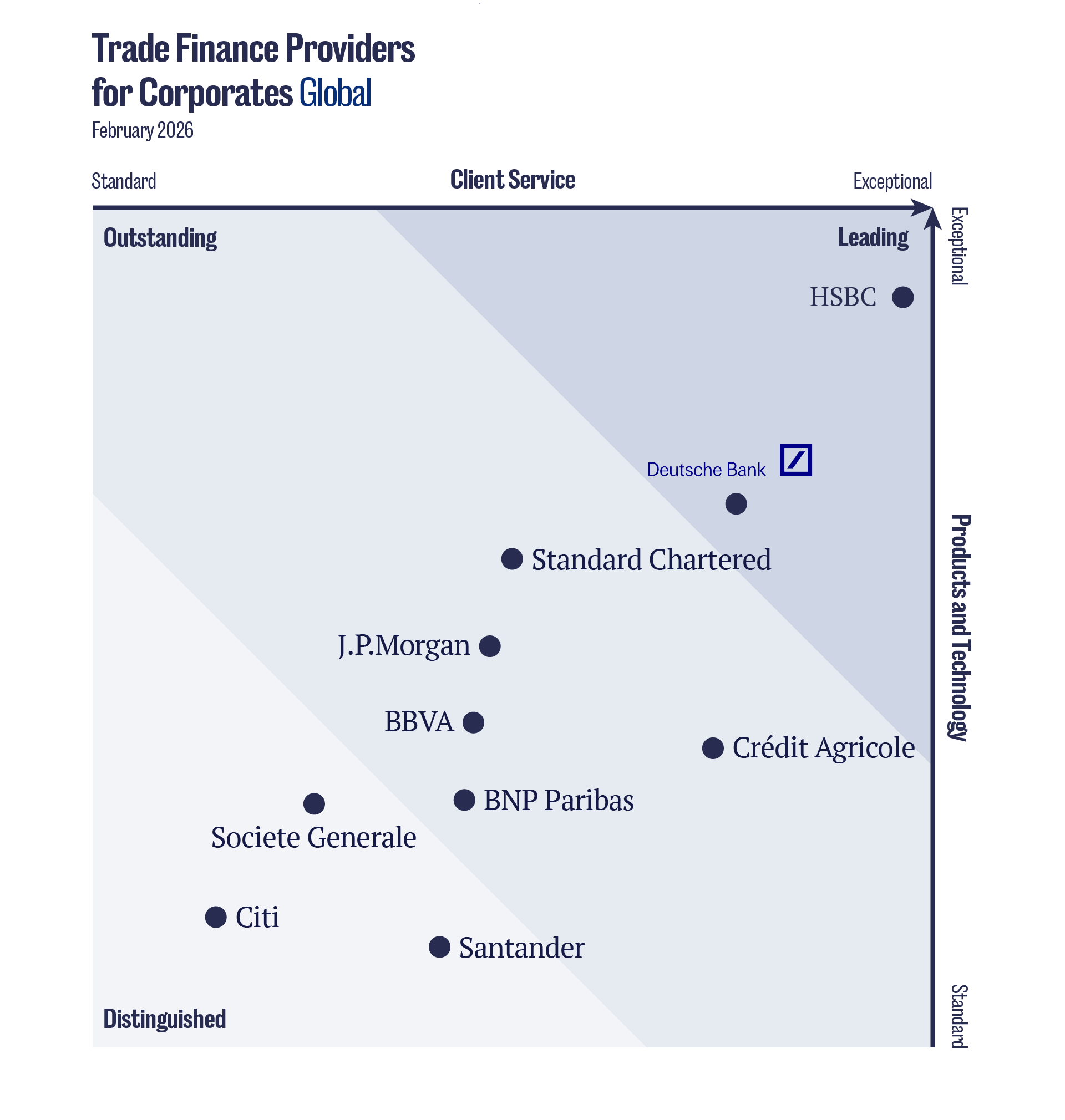
Figure 1: Euromoney Trade Finance Survey results
Source: Euromoney
FX volatility, geopolitics, cybersecurity, and regulatory change
Despite continued momentum in global trade, early indicators point to a more uncertain outlook. The World Trade Organization’s (WTO) 2026 merchandise trade growth projection has been revised down to 0.5%, from 1.8% previously, while year-on-year global services export growth is expected to slow from 4.6% in 2025 to 4.4% in 2026.2
Euromoney’s survey examined not only how corporates are interacting with their banking partners, but also their perspective on the macro risks likely to define trade finance in the years ahead. Respondents were asked to identify the top three factors affecting their trade finance activities in 2025, with analysis drawing on responses from 9,861 corporates globally. Key concerns for corporates as they headed into 2026 were:
“Trade finance remains critical – not just to support flows, but in helping clients to maintain access to global markets and manage risk at home and abroad”
- FX volatility was reported as the most prominent global risk affecting corporates, driven by persistent currency swings, diverging interest-rate paths, and uneven monetary policy normalisation. Corporates with cross-border exposure faced challenges not only in managing costs but also in staying within internal risk governance limits. While hedging tools are widely available, the survey found that execution remains inconsistent – with fragmented platforms, pricing opacity and poor integration into trade workflows limiting effectiveness.
- Cybersecurity because of concern around fraud and operational resilience. The threat landscape is evolving rapidly, with generative AI enabling more sophisticated document manipulation and data tampering. In response, financial institutions are investing in enhanced verification technologies, data analytics and automation to strengthen controls and reduce reliance on manual processes.
- Geopolitical risk ranked third in the survey, with almost half of large corporates identifying it among their top three concerns – an impact felt particularly strongly among Europe-based firms. Trade policy uncertainty, including sanctions, export controls and unilateral measures, has added further complexity, increasing compliance burdens for both corporates and banks.
- Regulation remains a significant concern, particularly as Basel III final reforms move toward implementation. Stakeholders continue to engage regulators about capital rules reflecting the realities of the trade finance landscape. At the same time, updated accounting and disclosure standards under IFRS and US GAAP are reshaping supply chain finance reporting 3, prompting more disciplined programme design, clearer risk allocation and greater transparency in balance-sheet treatment.
“From geopolitics and tariffs to regulatory and technological change, corporates are managing a far broader risk landscape. In this context, trade finance remains critical – not just to support flows, but in helping clients to maintain access to global markets and manage risk at home and abroad,” concluded Mueller.
Deutsche Bank results
Deutsche Bank was ranked No. 1 21 times in Euromoney’s 2026 corporate survey on trade finance, alongside strong global and regional placements – ranking No. 2 globally and in Asia Pacific, No. 6 in Western Europe and No. 1 position in the US.
At national level, Deutsche Bank achieved the following No. 1 rankings:
Europe, UKI, DACH:
- Overall No. 1 Trade Finance Provider and No. 1 Technology for Belgium
- No. 1 Trade Finance Products for Germany
- No. 1 Trade Finance Products for the Netherlands
- No. 1 Trade Finance Products for Spain
Americas:
- Overall No. 1 Trade Finance Provider, No. 1 Products and No. 1 Technology for the USA
APAC-MEA:
- Overall No. 1 Trade Finance Provider, No. 1 Client service, No. 1 Products, and No. 1 Technology for Pakistan
- Overall No. 1 Trade Finance Provider, No. 1 Client service and No. 1 Products for Taiwan
- Overall No. 1 Trade Finance Provider, No. 1 Client service, No. 1 Products and No. 1 Technology for Thailand
- No. 1 Trade Finance Products for Japan
- No. 1 Trade Finance Products for Singapore
Sources
1 See On the brink: Trade, finance and the reshaping of the global economy at unctad.org
2 See AI goods and frontloading lift world trade in 2025 but outlook dims for 2026 at wto.org
3 See Disclosure requirements for supplier finance arrangements: Implications for financial reporting at accountancyage.com